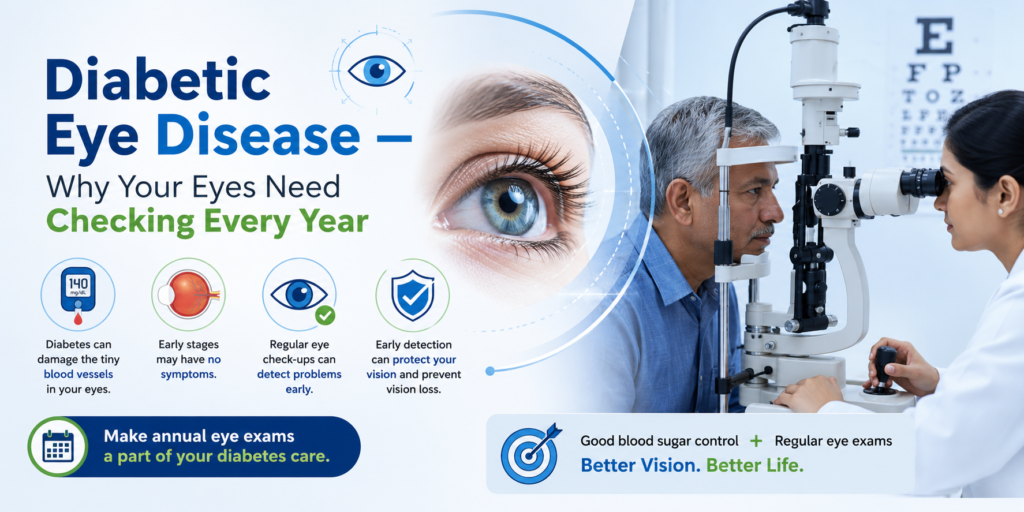
The Link Between Diabetes and Your Eyes
Diabetes affects the entire body — and the eyes are among the organs most vulnerable to its long-term effects. Persistently high blood sugar damages small blood vessels throughout the body, including the delicate network of blood vessels that supply the retina — the light-sensitive layer at the back of the eye. When these blood vessels are damaged, the condition is called diabetic retinopathy.
India has one of the highest numbers of people with diabetes in the world — and Ludhiana, with its urban population and changing dietary habits, reflects this national trend. At Dr. Ramesh Superspeciality Eye & Laser Centre, retinal disease including diabetic retinopathy is managed by Dr. Ajay Kumar Kapoor — a Vitreo-Retinal Surgeon with fellowship training from AIIMS, New Delhi and L V Prasad Eye Institute, Hyderabad.
What Is Diabetic Retinopathy?
Diabetic retinopathy develops when high blood sugar levels cause the tiny blood vessels in the retina to leak, swell, or grow abnormally. It progresses through stages:
• Non-Proliferative Diabetic Retinopathy (NPDR) — Mild to Moderate: The earliest stage, in which the blood vessel walls weaken and form small balloon-like pouches (microaneurysms). Tiny amounts of blood or fluid may leak into the retina. There are usually no symptoms at this stage.
• Severe Non-Proliferative Diabetic Retinopathy: Larger blood vessels in the retina become blocked, cutting off blood supply to areas of the retina. The retina signals for new blood vessel growth to compensate.
• Proliferative Diabetic Retinopathy (PDR) — Advanced Stage: The retina responds to poor blood supply by growing new, fragile blood vessels — a process called neovascularisation. These new vessels are structurally weak and prone to bleeding into the vitreous (the gel inside the eye), causing sudden, severe vision loss.
A separate but related condition is Diabetic Macular Oedema (DMO) — where fluid leaks into the macula, the central part of the retina responsible for detailed vision. DMO can occur at any stage of diabetic retinopathy and causes blurring of central vision.
Why Are There Often No Symptoms Until It Is Too Late?
This is the most dangerous aspect of diabetic retinopathy — the early and even moderate stages cause no pain, no redness, and often no noticeable change in vision. The patient feels completely normal while progressive and permanent damage is occurring at the back of the eye.
By the time symptoms appear — such as blurred or fluctuating vision, floaters (dark spots or strings floating in the vision), or sudden loss of vision — the retinopathy is usually at an advanced stage. Significant and irreversible damage may already have occurred. This is why annual retinal examination is not optional for people with diabetes — it is essential.
Other Eye Conditions Linked to Diabetes
Beyond diabetic retinopathy, people with diabetes have a higher risk of several other eye conditions:
• Cataract: Diabetic patients are 2 to 5 times more likely to develop cataracts — and they tend to develop them at a younger age and progress more rapidly. Cataract surgery is safe and effective in well-controlled diabetics.
• Glaucoma: Diabetes increases the risk of glaucoma, particularly neovascular glaucoma — a serious form caused by the growth of abnormal blood vessels over the eye’s drainage system.
• Refractive changes: Uncontrolled diabetes can cause temporary blurring of vision as the lens changes shape in response to fluctuating blood sugar levels. This is not permanent and improves with better blood sugar control.
What Does a Diabetic Eye Check Involve?
At Dr. Ramesh Superspeciality Eye & Laser Centre, a diabetic eye examination typically includes:
• Vision test: Visual acuity testing — to assess how sharp your central vision is
• Dilated retinal examination: Dilated fundus examination — eye drops are used to widen the pupil, allowing Dr. Ajay Kapoor to examine the retina, optic nerve, and blood vessels thoroughly using specialised equipment
• OCT scan: Optical Coherence Tomography (OCT) — a detailed cross-sectional scan of the retina that detects even subtle macular oedema long before it is visible on clinical examination
• Retinal photography: Fundus photography — photographs of the retina provide a baseline record and allow comparison at future visits to track disease progression or regression
• Eye pressure check: Measurement of intraocular pressure — to screen for glaucoma
The examination is performed after pupil dilation, which may cause temporary blurring and light sensitivity for a few hours. Patients are advised not to drive themselves to this appointment.
How Is Diabetic Retinopathy Treated?
The most effective treatment for diabetic retinopathy is prevention — through excellent blood sugar control, blood pressure management, and annual eye checks to detect and treat changes before they progress.
When treatment is required, options include:
• Intravitreal anti-VEGF injections: Anti-VEGF injections (bevacizumab, ranibizumab, aflibercept) are injected directly into the eye and work by blocking the growth of abnormal blood vessels and reducing macular oedema. They are the primary treatment for diabetic macular oedema and proliferative retinopathy.
• Laser treatment: Laser photocoagulation — laser treatment is applied to areas of the retina with poor blood supply, reducing the stimulus for abnormal vessel growth and sealing leaking vessels.
• Vitrectomy surgery: In advanced cases — such as vitreous haemorrhage (bleeding into the eye) or tractional retinal detachment — surgical removal of the vitreous gel (vitrectomy) may be required. Dr. Ajay Kumar Kapoor is a trained vitreo-retinal surgeon who performs vitrectomy at our centre.
How Can You Protect Your Eyes If You Have Diabetes?
The steps that protect your eyes are the same steps that protect your overall health in diabetes:
• Control blood sugar: Keep your HbA1c (blood sugar control) within the range your doctor has recommended — ideally below 7%
• Control blood pressure: Keep blood pressure below 130/80 mmHg
• Stop smoking: Do not smoke — smoking significantly worsens diabetic retinopathy
• Annual eye check: Attend your annual dilated retinal examination — every year, without exception, even if your vision seems fine
• Report symptoms promptly: Report any sudden change in vision, new floaters, or flashes of light to your eye doctor immediately
If you have been diagnosed with diabetes — Type 1 or Type 2 — and have not had a retinal examination in the past year, we strongly encourage you to book an appointment at Dr. Ramesh Superspeciality Eye & Laser Centre as soon as possible. Early detection genuinely saves sight.